If you landed on this article because you typed something like “Can Catholics do yoga?” into Google, I want to start by saying this: I understand why you’re asking.
We live in a fitness culture where spiritual language gets mixed into everything. Breathwork becomes “energy work.” Stretching gets called yoga.
Meditation can mean anything from quietly settling your nervous system to deliberately entering a non-Christian spiritual practice.
And if you’re a Catholic who is actually trying to take the First Commandment seriously, of course you want to know where the line is.
I do too.
But I also think we have to be careful not to answer a serious spiritual question with sloppy thinking.
Spend enough time around Christian social media and somebody will eventually tell you that almost any stretch is yoga. Reach toward your toes? Yoga. Open your hips? Yoga. Sit cross-legged? Yoga. Lie flat on your back with your arms at your sides? Apparently you’ve stumbled into Savasana simply by going to bed.
At some point, we have to admit that this argument starts eating itself.
I am Catholic. I take the spiritual life seriously. I do not practice yoga as a spiritual discipline, I do not teach yoga, and I am not interested in pretending that all spiritual practices are interchangeable.
But I have also worked professionally with the human body since 1997. My background began in dance. I hold a BFA in Dance from Fordham University through the Alvin Ailey program. I became an IFBB Professional Women’s Physique athlete, and I have spent decades coaching human movement.
So when somebody tells me that ordinary hip flexion, spinal extension, balance work, or stretching somehow becomes yoga simply because yoga also uses a similar position, I have to stop them there.
Because now we have an anatomy problem.
And, oddly enough, we may also have a theology problem.
Catholics are called to discern spiritual realities carefully. That means neither being naive about them nor assigning hidden spiritual power to ordinary bodily movements.
Yoga Did Not Invent the Human Body
Let me put on my trainer hat for a minute, because this part is much simpler than people make it sound.
The body has a finite vocabulary of movement. Our joints flex and extend. They abduct and adduct. They internally and externally rotate. The spine rotates and laterally flexes. The ankle plantar flexes and dorsiflexes. The forearm pronates and supinates. Those basic actions combine into the thousands of things we do every day.
The National Academy of Sports Medicine organizes human movement through the sagittal, frontal, and transverse planes. Flexion and extension largely occur in the sagittal plane, abduction and adduction largely occur in the frontal plane, and rotation largely occurs in the transverse plane.
There is no fourth anatomical plane called the Yoga Plane.
Yoga can use ordinary human movements. So can plenty of other disciplines:
- Hip flexion appears in yoga, dance, strength training, and daily life.
- Spinal extension appears in yoga, gymnastics, mobility work, and physical therapy.
- Squatting appears in yoga, bodybuilding, athletics, and ordinary human movement.
Human beings were squatting long before anybody opened a boutique studio and charged twenty-eight dollars for a class.
The point is not that yoga has no distinct identity. It does. The point is that a system can name a position without owning the anatomy that makes that position possible.
The human body came first.
A Posture Is Not the Same Thing as a Human Act
This is where I think Catholics can understand the issue better than almost anyone, because our faith already teaches us that bodily gestures can carry meaning without being reducible to the gesture itself.
Take kneeling.
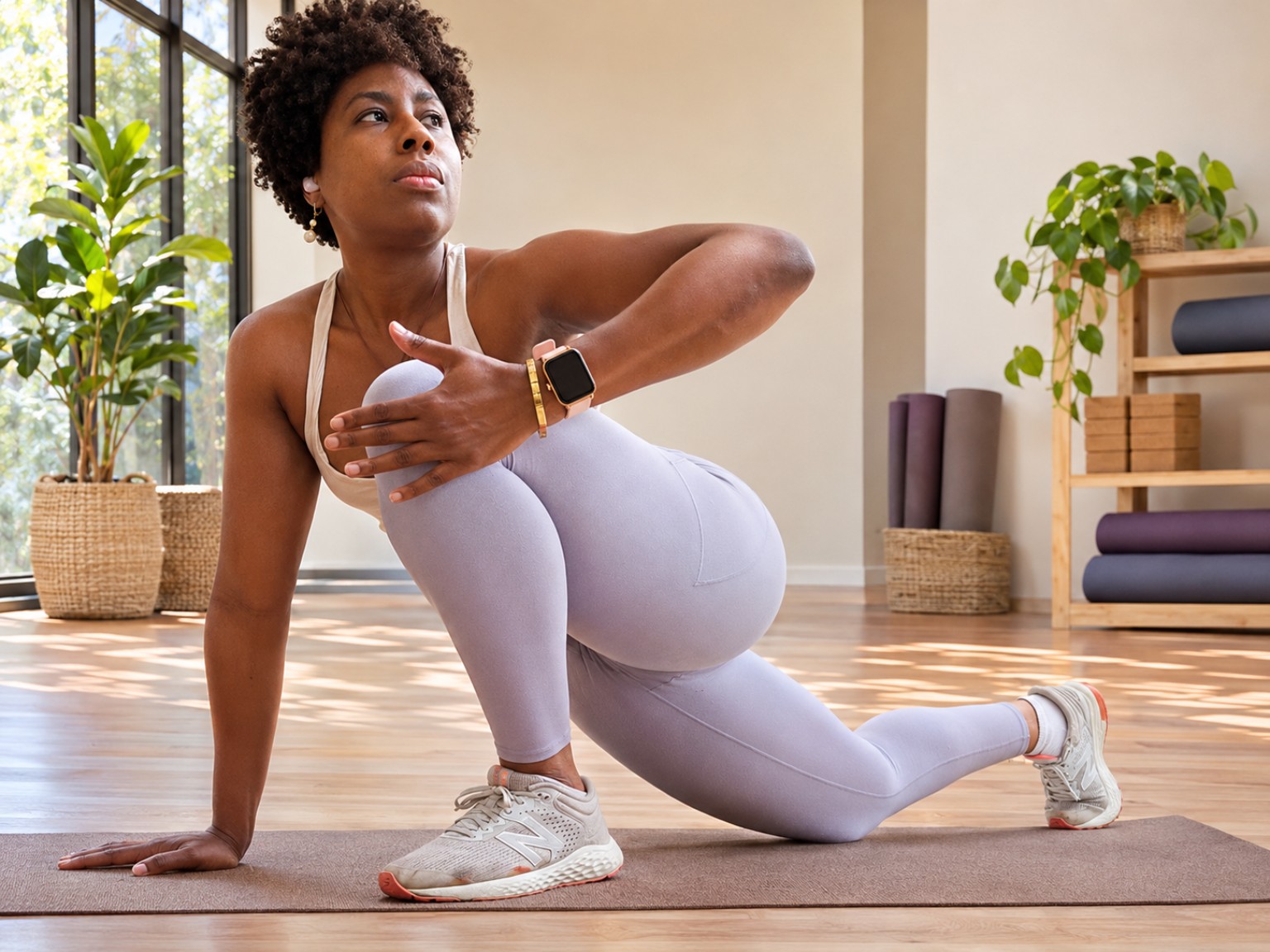
I can kneel before the Blessed Sacrament in Eucharistic Adoration. I can also kneel on my living room floor because one of my cats knocked something underneath the couch. The position of my knees may be almost identical. The human acts are not.
Or think about lying flat on your back. You could be sleeping, undergoing a medical exam, resting between sets, doing rehabilitation, praying, or participating in a yoga class where that same general position is called Savasana.
Same general geometry. Different act.
Geometry is not liturgy.
Catholic moral theology helps us here. The Catechism of the Catholic Church, paragraph 1750, teaches that the morality of human acts involves the object chosen, the intention, and the circumstances.
That does not mean, “My intentions are good, so anything goes.” The Church is equally clear that a good intention cannot make an intrinsically evil act good.
But it does mean that if we want to judge an act correctly, we have to ask what the person is actually choosing and doing. A freeze-frame of somebody’s hips and shoulders is not enough.
But Yoga Is Not “Just Stretching” Either
Now let me turn the argument around, because Christians can make the opposite mistake too.
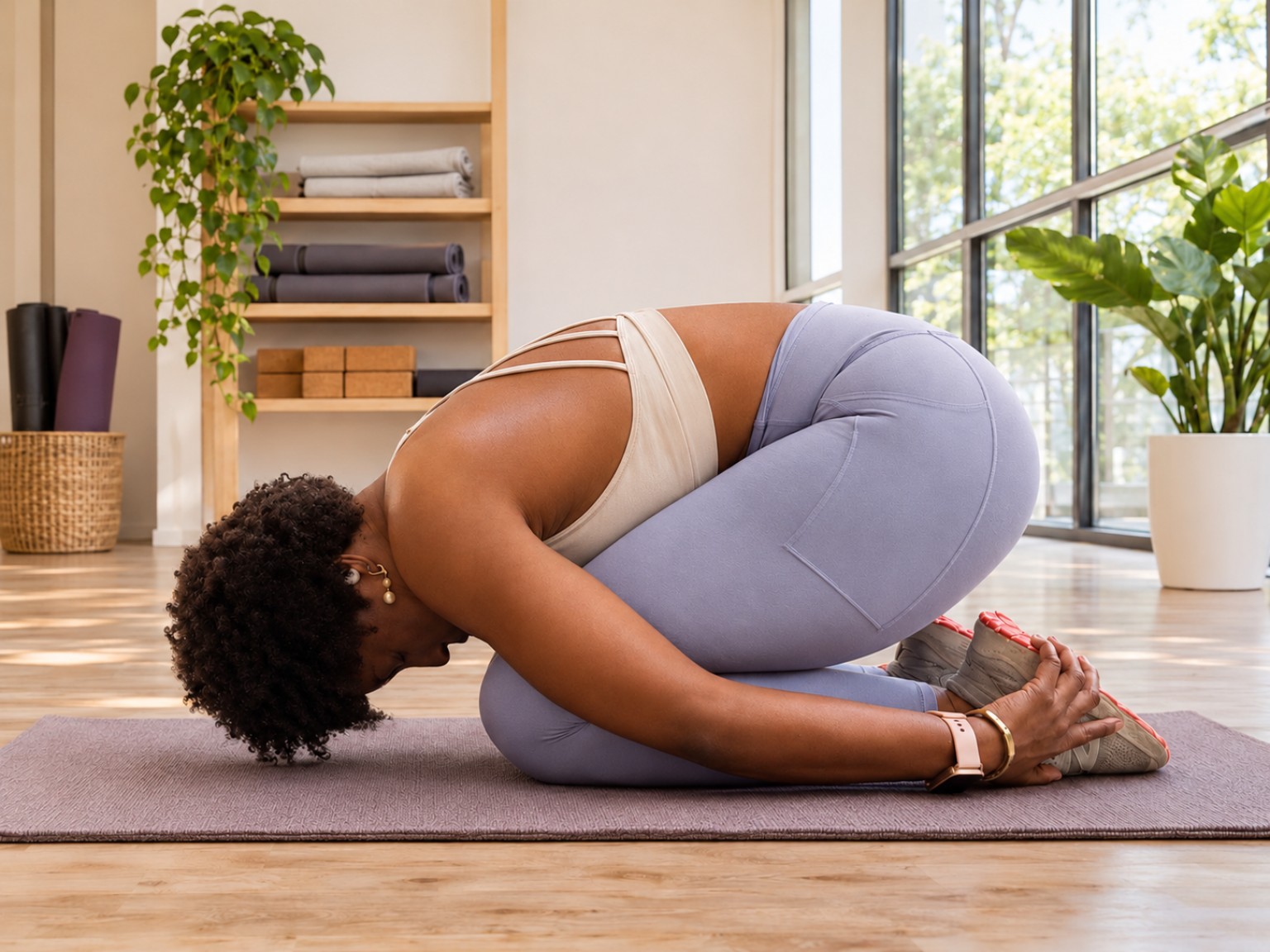
I am not saying yoga is merely stretching with exotic names attached to it. Historically, that is not true.
Yoga developed within Indian religious and philosophical traditions, and classical systems involve much more than physical postures. Patanjali’s well-known eightfold system, for example, includes ethical disciplines, observances, posture, breath control, withdrawal of the senses, concentration, meditation, and absorption. The Internet Encyclopedia of Philosophy’s treatment of the Yoga Sutras lays out those eight limbs and the larger spiritual framework in which they appear.
At the same time, modern posture-centered yoga has its own history. Historian Mark Singleton’s Yoga Body: The Origins of Modern Posture Practice, published by Oxford University Press, documents the rise of posture-focused yoga in the nineteenth and twentieth centuries and its interaction with gymnastics, bodybuilding, and physical culture.
That gives us two truths we have to be mature enough to hold together:
Yoga is more than stretching.
Stretching is not therefore yoga.
Both statements can be true at the same time.
Why the Word “Yoga” Gets So Messy in Modern Fitness
This is also where the fitness industry has made the conversation muddy.
I have personally taken yoga classes in commercial gyms in the past. I did not enter those rooms looking for another religion. The classes I experienced were presented primarily as fitness classes built around mobility, flexibility, balance, breathing, body control, and relaxation.
That does not mean every class marketed as yoga is spiritually neutral. Some are far more explicitly spiritual. But it does mean the word yoga is now being used to describe very different experiences.
One word, several very different experiences
Today the fitness industry uses the word yoga for all kinds of things:
- Power yoga
- Yoga sculpt
- Yoga flow
- Fitness yoga
- Hot yoga
- Yoga fusion
- Yoga-inspired mobility
One person hears “yoga” and thinks of a religious-philosophical system. Another thinks of a flexibility class at a gym. Another thinks of meditation. Another thinks of athletic mobility with Sanskrit names attached.
So when a Catholic asks me, “Is yoga okay?” my first question is honestly: What exactly are we talking about?
Because those distinctions matter.
What Does the Catholic Church Actually Condemn?
This is where I want to slow down and be very Catholic about the answer.
We do not need to invent prohibitions the Church herself has not given us.
The Catechism is not shy when it comes to practices that violate the First Commandment. In CCC 2110-2117, the Church explicitly warns against:
- Superstition
- Divination
- Horoscopes and astrology
- Palm reading and interpreting omens
- Clairvoyance and recourse to mediums
- Magic and sorcery
And the Church tells us why these practices are disordered. Divination seeks forbidden knowledge or mastery over the future instead of trusting Divine Providence. Magic and sorcery seek power over hidden forces. Idolatry gives to a creature what belongs to God. Superstition distorts religion itself.
That is serious. Catholics should take it seriously.
But notice what the Catechism does not do. It does not simply put the word yoga in a list beside horoscopes, mediums, and sorcery and call the case closed.
That does not mean every practice called yoga is automatically safe. It means we have to do the harder thing: discern what is actually present.
Superstition Can Run in More Than One Direction
This is where the conversation gets uncomfortable for some Christians, but I think we need to say it.
CCC 2111 warns against attributing a kind of magical importance to the external performance of an act, as though the outward action itself carried spiritual power apart from what is actually being done.
The Catechism is not talking about yoga there. I do not want to force a paragraph to say something it does not say.
But the principle absolutely matters.
If we start believing that crossing the legs, extending the spine, placing the hands on the floor, or lying flat on the back automatically opens a spiritual door regardless of context, intention, belief, or participation, we may have wandered into a strangely magical view of the body.
Catholicism is sacramental. It is not magical.
In the sacraments, Christ acts through signs he instituted and entrusted to the Church. That is very different from believing that every physical configuration carries autonomous spiritual power because some other religion also uses it.
A joint angle is not a sacrament.
And it is not automatically an occult ritual either.
So When Does Yoga Become a Real Spiritual Problem?
Here is where I would tell a fellow Catholic to pay close attention.
If a class moves beyond exercise and asks you to participate in things like these, then yes, we have entered a genuine moral and theological question:
- Invoking deities
- Adopting beliefs contrary to Christianity
- Pursuing a non-Christian form of enlightenment
- Manipulating supposed spiritual energies
- Communicating with spirits or invoking hidden powers
- Replacing Christian prayer with an incompatible spirituality
At that point we are no longer talking about a tight hip flexor.
The Vatican’s 1989 document Orationis formas addresses Christians adopting methods of meditation associated with Eastern religions and stresses the need for sound doctrinal criteria.
What I appreciate about the document is that it does not treat the body as dangerous. Instead, it warns against confusing physical or psychological states with authentic spiritual experience and against letting a technique distort the nature of Christian prayer.
That is a much more useful question than, “Does this pose look suspicious?”
The Deeper Question: Who Saves You?
There is an even deeper issue underneath all of this, and I think it is the one Catholics should really care about.
Christianity does not teach that salvation is a technique.
We are not saved because we discovered the correct breath pattern. We do not ascend to God because we mastered our nervous system. We do not manipulate grace by perfecting a method. God is not an impersonal energy field waiting for us to figure out the right access code.
The Vatican’s 2003 reflection Jesus Christ the Bearer of the Water of Life examines New Age spirituality and contrasts Christian revelation with worldviews centered on impersonal energy, altered states, esoteric knowledge, and self-realization.
The question underneath all of that is simple: Who saves us?
Do I save myself through technique, self-development, and spiritual mastery? Or am I saved by the grace of God through Jesus Christ?
That is where the line becomes much clearer.
Not because the hip externally rotated.
Because theology entered the room.
Faith Should Not Be Afraid of Reason
This whole conversation matters to me because Catholics should never have to become less intelligent in order to become more faithful.
Saint John Paul II’s Fides et Ratio famously presents faith and reason as ordered together toward truth. He also warns that faith deprived of reason can slide toward myth or superstition.
If anatomy tells us what hip flexion is, we should learn the anatomy.
If history tells us that modern postural yoga developed through a complicated interaction of religion, culture, gymnastics, bodybuilding, and physical training, we should learn the history.
And if Catholic moral theology tells us to examine the object, intention, and circumstances of a human act, then we should actually use those categories.
Truth does not need us to be afraid of facts.
The Body Is Not the Enemy
This is where the subject becomes unmistakably Theology of Fitness.
The Catholic vision of the human person rejects the idea that your soul is the “real you” trapped inside a suspicious biological shell. The Catechism teaches that the human person is both corporeal and spiritual, and that body and soul form one human nature.
I go much deeper into that in The Catholic View of the Body, because this body-soul unity changes the way we think about training, health, discipline, suffering, and even something as ordinary as stretching.
Gaudium et Spes 14 says that the human person, though made of body and soul, is one, and therefore must regard bodily life as good and honorable because God created it and will raise it on the last day.
That is not a small point.
God created the body. The Son assumed a real human body. Christ suffered in it. Christ rose bodily. And we profess the resurrection of the body.
So Christianity does not teach us to fear ordinary human movement. It teaches us to understand the body rightly and order it rightly.
That same body-soul integration is at the heart of Catholic Fitness Explained and of the whole Theology of Fitness project.
So, Can Catholics Do Yoga?
If you came here hoping I would give you one word and send you on your way, I understand the appeal.
But I do not think one word is honest enough.
If you mean ordinary stretching or mobility
If by “yoga” you mean stretching your hamstrings, opening your hips, practicing balance, or doing a movement that also happens to appear in a yoga class, then visual resemblance does not make the movement sinful.
If you mean explicitly non-Christian spiritual practice
If by “yoga” you mean participating in explicitly non-Christian worship, embracing beliefs contrary to the faith, or entering a spiritual practice ordered toward a worldview incompatible with Christianity, that is a different matter.
If you mean a modern fitness class called yoga
Then prudence matters. Ask what is actually taught, what is being said, and what you are being asked to affirm. Consider the purpose of the class, whether it creates spiritual confusion for you, and whether there are elements you should simply avoid.
A Catholic can also reasonably say, “You know what? I do not want anything to do with yoga at all. I would rather stretch another way.”
That is a perfectly legitimate prudential choice.
What I would resist is turning that personal prudence into a universal doctrine the Church herself has not articulated.
“I choose not to do this” and “the Catholic Church teaches that anyone whose body enters this position is practicing another religion” are not the same claim.
What Can Catholics Do Instead?
The good news is that if you simply want to become more mobile, flexible, strong, or calm, you do not need yoga to accomplish any of those things.
If your goal is physical, you have plenty of options:
- Flexibility training
- Hip and shoulder mobility work
- Strength training
- Dance or barre
- Walking, running, or swimming
- Physical therapy when rehabilitation is what you need
You do not need to spiritualize ordinary exercise in order for exercise to be valuable.
What about breathing and meditation?
The same is true of breathing. Slow diaphragmatic breathing affects human physiology. You can use your breath to settle after training because you have lungs, a diaphragm, and an autonomic nervous system.
You do not need to attach a cosmology to every exhale.
And if what you are actually hungry for is contemplation, then Catholicism is not exactly spiritually understocked.
- Pray the Rosary.
- Practice Lectio Divina.
- Spend time in Eucharistic Adoration.
- Pray the Liturgy of the Hours.
- Sit quietly before the Lord.
- Meditate on Scripture.
- Learn from the great Catholic contemplative tradition.
We do not need to turn exercise into prayer because we have forgotten how to pray.
And we do not need to make prayer less embodied either. Catholics kneel, stand, sit, bow, genuflect, process, fast, sing, speak, and make the Sign of the Cross. Our bodies participate in prayer because our bodies are part of who we are.
That is the beauty of a Catholic understanding of the person.
A Simple Catholic Discernment Framework
If you are evaluating yoga, breathwork, meditation, energy practices, or really any fitness-wellness practice that starts drifting into spiritual territory, here are the four questions I would ask.
1. Movement
What is my body physically doing?
Strip away the branding first. Is this hip flexion? A hamstring stretch? Balance? Spinal rotation? Controlled breathing?
2. Method
What system is organizing the activity?
Is this physical therapy, mobility training, dance, Pilates, yoga, a religious ritual, or Christian prayer?
3. Meaning
What meaning is being attached to what I am doing?
Am I breathing slowly because I want to recover after training? Am I kneeling because I am worshipping Christ? Am I being asked to attach a spiritual meaning to a movement?
4. Metaphysics
What does this practice claim about God, the human person, salvation, consciousness, spiritual powers, or ultimate reality?
This is where Christians really need to pay attention.
A movement may be ordinary. A philosophy attached to it may not be. A breathing technique may be physiologically normal. A spiritual claim made about that technique may be incompatible with Christianity.
That is where discernment belongs.
Better Discernment, Not More Fear
I understand why Catholics are cautious here. We live in a culture where genuine occult ideas are often packaged as wellness.
Astrology gets repackaged as personality insight. Manifestation gets sold as empowerment. Crystals, energy work, and spiritual practices can sit right beside resistance bands and protein powder.
We should be alert.
But vigilance is not the same thing as fear, and fear is not the same thing as discernment.
The Church gives us real tools. She tells us to reject divination, false worship, magic, occult manipulation, and spiritual systems incompatible with the Gospel. She also tells us that the body is good, reason is good, and the human person is a unity of body and soul.
So we do not need to panic every time a Christian body happens to form a silhouette that also appears somewhere in yoga.
We need to know what we are actually doing.
The body does not belong to yoga. It does not belong to fitness culture. It does not belong to the mirror. The body belongs to God.
So understand it. Care for it. Train it. Order it rightly.
And when a spiritual question arises, use the tools the Church has actually given us.
Understand the movement. Understand the method. Understand the meaning. Understand the metaphysics. Then discern.
That is Theology of Fitness.
Related Reading
- The Catholic View of the Body: Christian Anthropology Explained
- Catholic Fitness Explained: Faith, Discipline, and the Body
- What Is Theology of Fitness? A Catholic Vision for the Body in an Age of Confusion
- Memento Mori: Why Remembering Death Will Change Your Fitness Journey
Go deeper with Theology of Fitness
Join the Email List
If you want more conversations about training, the body, virtue, Catholic anthropology, and the spiritual questions hiding inside modern fitness culture, join the Theology of Fitness email list.